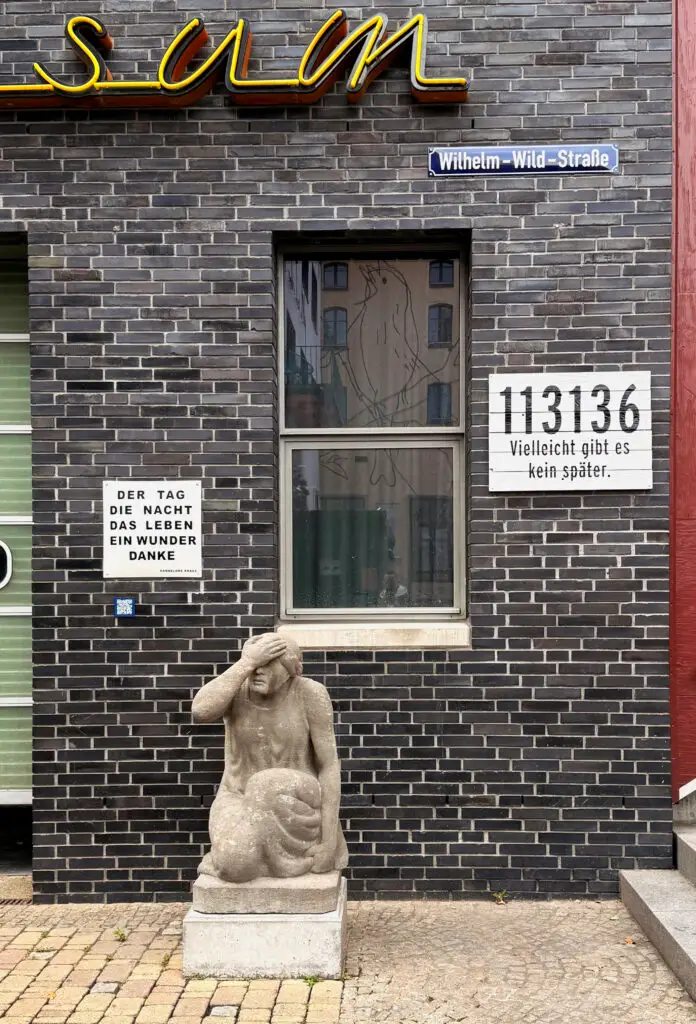
At first glance, this sign appears to be a riddle. A number. A sentence. No explanation. No context.
„113136 – Maybe there is no later.“
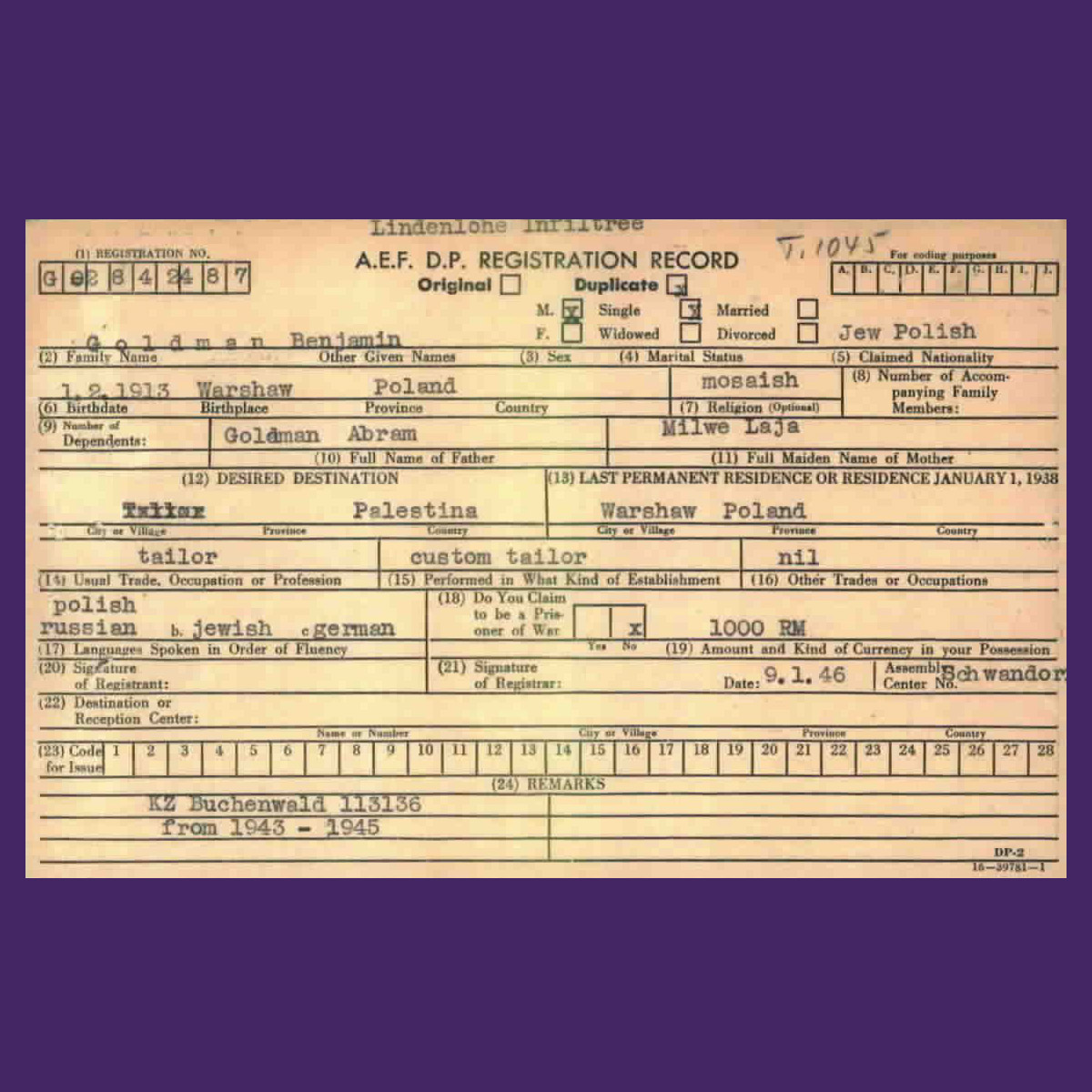
It is precisely in this speechless irritation that the true power of the work begins. For the number is not an abstract cipher. It is the registration number of a human being. The number of a survivor of the Warsaw Ghetto and the Buchenwald concentration camp. A number that once stood where a name was to be erased.
The sentence below it – „Perhaps there is no later“ – thereby gains an existential weight. It is not pessimistic. It is radically present. Because people who lived in ghettos and concentration camps did not know if there would be a tomorrow. For them, „later“ was not a promise, but a fragile possibility.
The work compels one to pause. The viewers begin to ask: What does this number mean? Who was this person? And that is precisely where memory begins to come alive. Not as a historical explanation, but as an emotional experience.
Few people know this: 113136 is the prisoner number of Benjamin Goldman – Ardi's father. A survivor of the Warsaw Ghetto and the Buchenwald concentration camp. He survived the unsurvivable. Taught his son to fear nothing. And died in a car accident in 1967 – when Ardi was five years old.
Ardi Goldman survived, severely injured. Chance of survival: five percent.
Decades later, he brought his father's number into play – and considered how it could find a place on the grounds. Together with Benjamin Knabe, the idea arose to represent it in the form of an old concentration camp sign. Artist Michael Dreher brought it to life.
Perhaps there is no later. But sometimes there is a nevertheless.