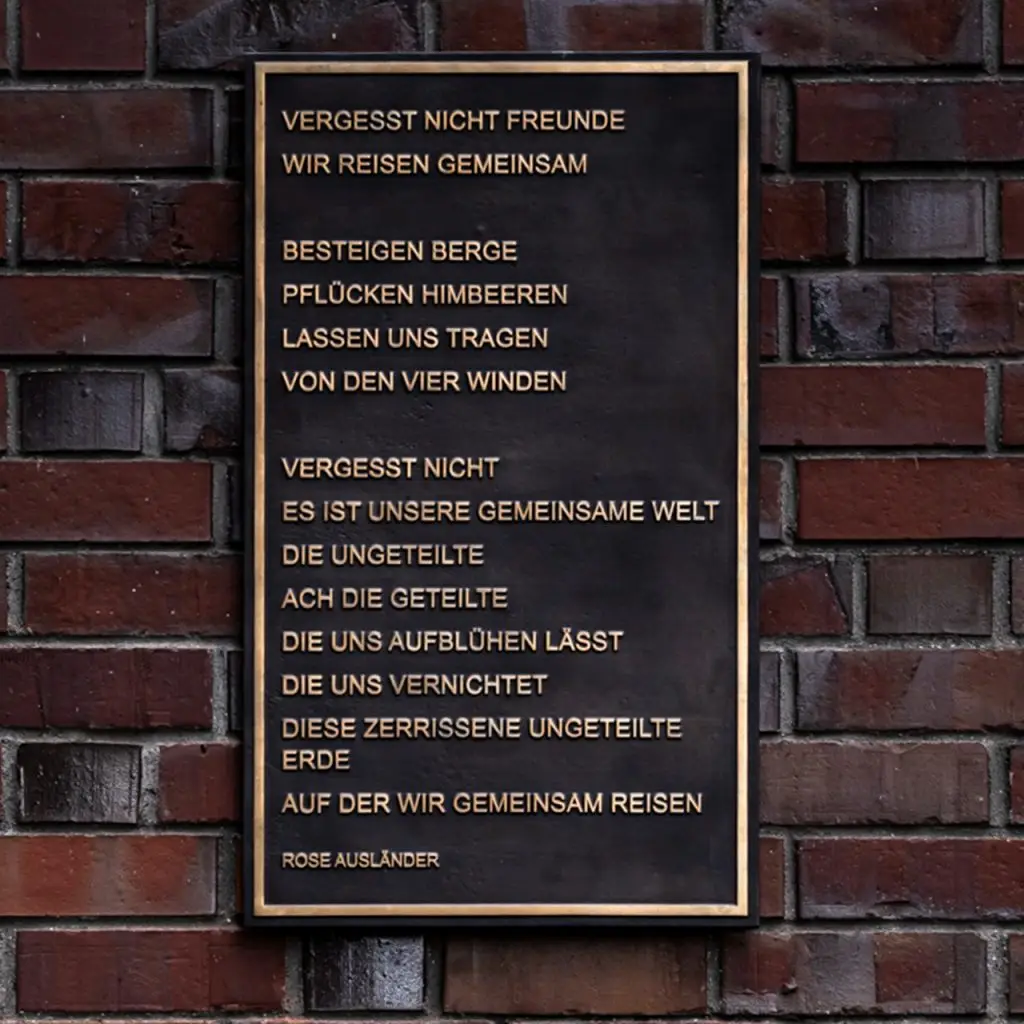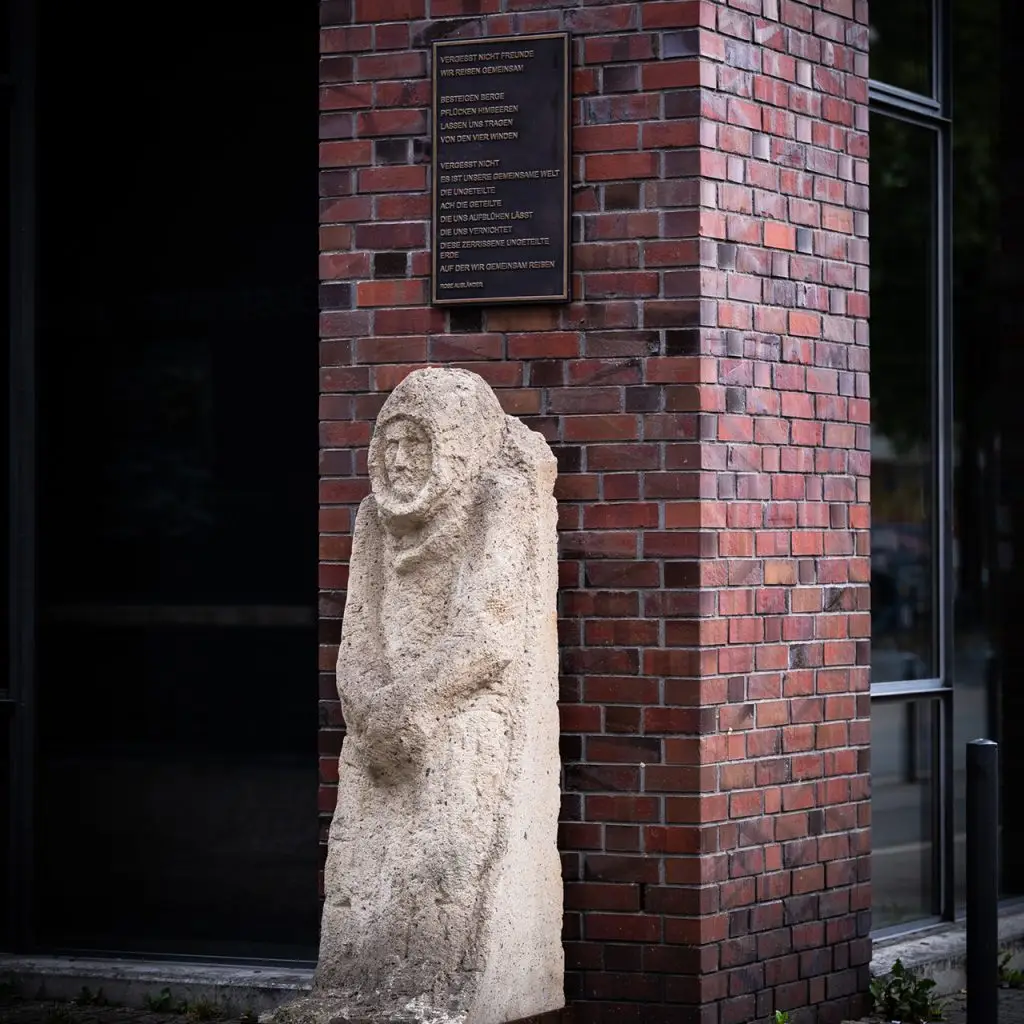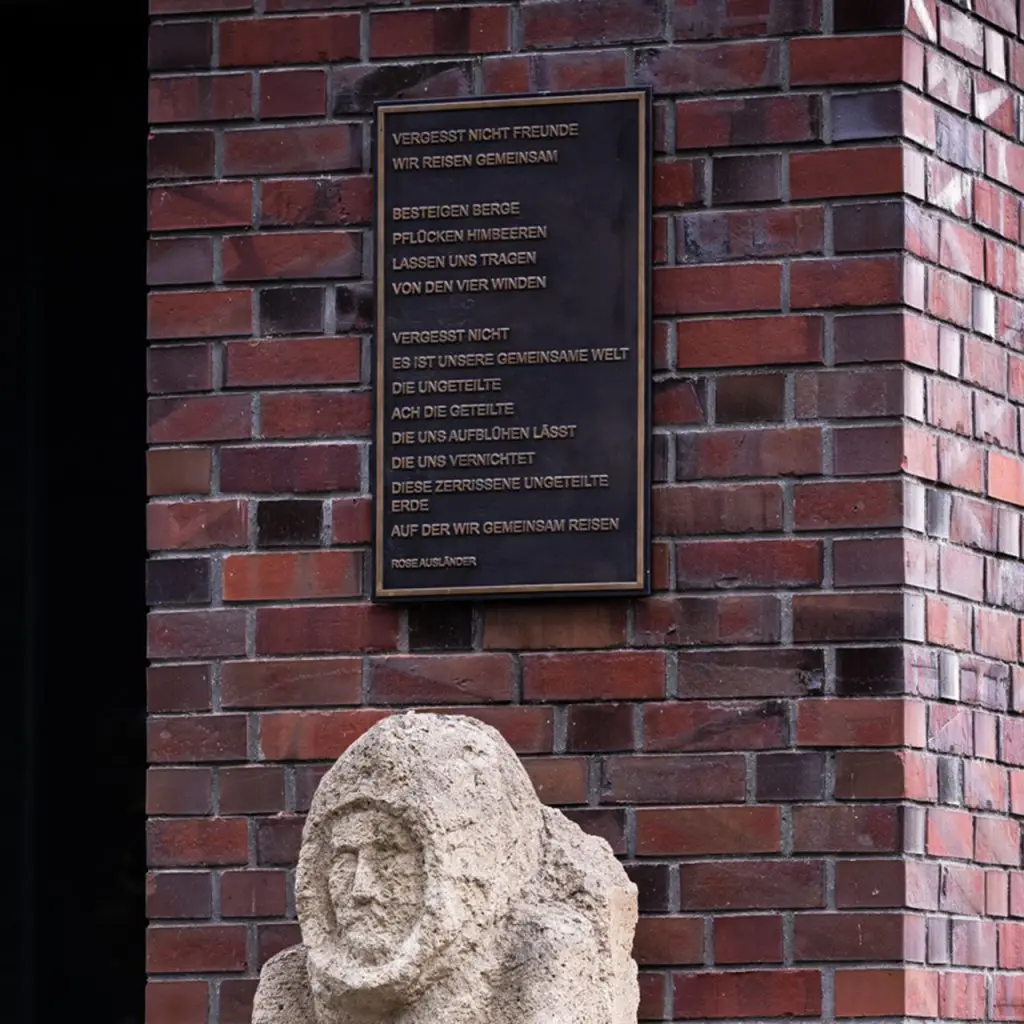
On the brick wall of the Union grounds, there is a cast aluminum plaque created by Eberhard F. Gutberlet in 2024. It bears the words of Rose Ausländer, a poet whose life was marked by the deepest abysses of the 20th century. Her plea, „Do not forget, friends, we travel together,“ is a timeless reminder that despite all divisions, we are responsible for one another on this one, undivided Earth.
The plaque hangs above Friedhelm Welge's work „Setting off to Other Worlds.“ The sculpture depicts Aegidius, who, as the only one of the Fourteen Holy Helpers, was able to conclude a fulfilled life and died peacefully – he is the one who survived. A disturbing yet hopeful parallel to Rose Ausländer emerges here. Like Aegidius, she too is a survivor, one who has returned from the darkness to show us the way. While the figure of Aegidius, in its capsule-like form, symbolizes protection and quiet contemplation, Ausländer's poem breaks open this shell: she reminds the survivor that their journey does not end in isolation, but in community with all those who are still on their way.
This interplay is part of a larger literary path on the grounds. Just a bit further, you'll find the plaque dedicated to Paul Celan, whom Rose Ausländer once met in the Czernowitz Ghetto. That both texts have now found their place here, each corresponding with a sculpture by Welge, weaves an invisible network of history and attitude. It is an invitation to comprehend the gift of survival as a mission—for a shared journey on this undivided Earth.