The streets and squares on the Union grounds are signposts: journeys through time that remind us of the beauty of life, the creative power of hope, and the courage to resist.
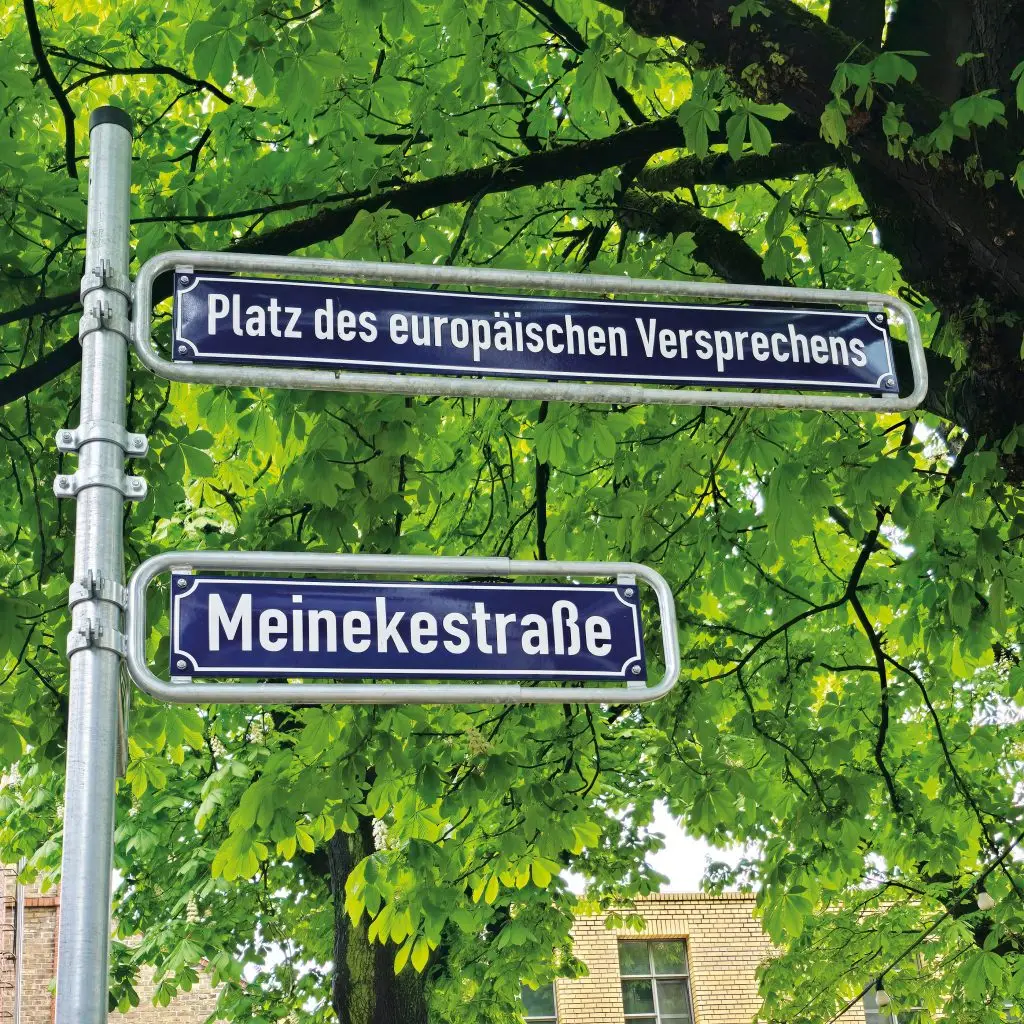
Place of European Promise
It is a tribute to the square of the same name in Bochum, in front of the Christuskirche, based on designs by the artist Jochen Gerz. Plates with the names of citizens who advocate for a united, peaceful Europe where human rights and the dignity of the individual are respected have been embedded in the floor of the square.
Anielewicz Square
This square commemorates the brave fighters of the Warsaw Ghetto Uprising and one of their leaders, Commander Mordechai Anielewicz. On April 19, 1943, they launched their offensive and, with unyielding courage, resisted to the very end.
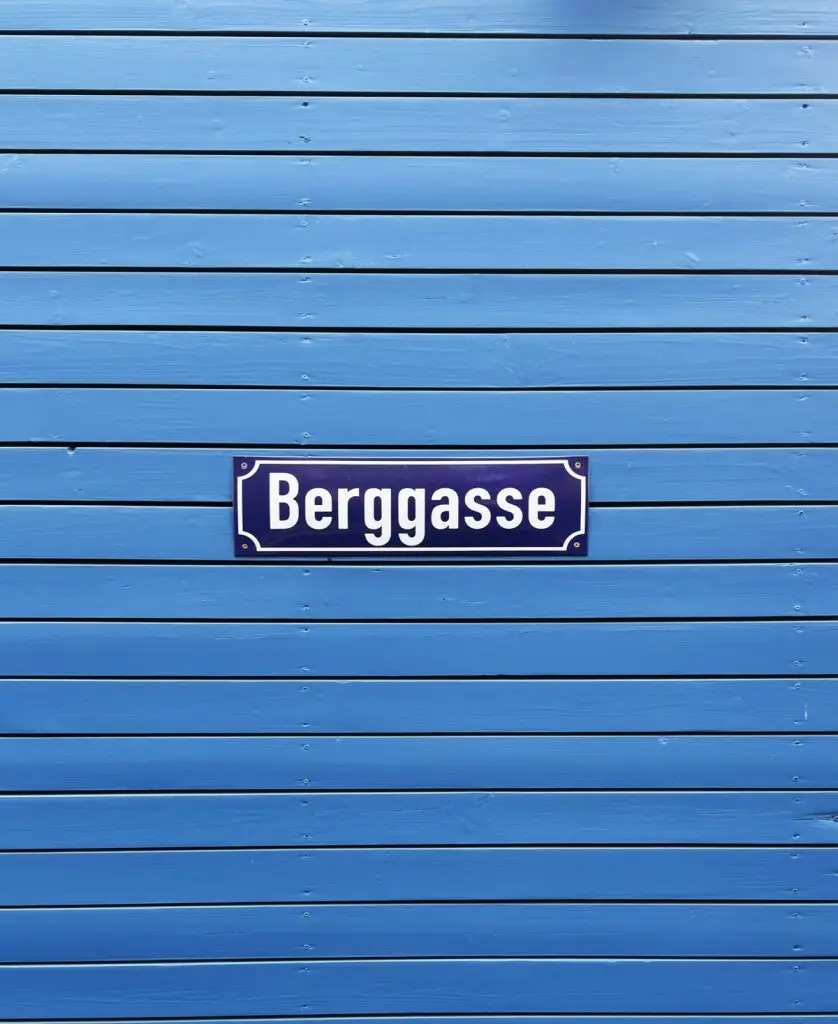
Berggasse 19
The address of Prof. Dr. Sigmund Freud's private practice in Vienna's 9th district was like a code for insiders. Convinced that psychological illnesses originated in personal history, Freud developed psychoanalysis. For only those who understand themselves can find a place in this dislocated world. Just in time, in 1938, after the German invasion, he was able to flee to England with his wife and daughter Anna.
Neuturm Street 5
On January 1, 1933 – 29 days before Hitler's appointment as Reich Chancellor – „Die Pfeffermühle“ premiered here, at the Munich revue theater „Bonbonniere.“ The „literary,“ explicitly anti-fascist „cabaret“ was founded by Erika Mann, her brother Klaus, the composer Magnus Henning, and the actress Therese Giehse. However, soon after the premiere, they emigrated to Zurich.
Street of Nations
This is the address of the Ravensbrück concentration camp in Fürstenberg an der Havel. One of the prisoners was Milena Jesenská. Kafka's letters to her are world-famous. But few know that the journalist and translator was also a courageous resistance fighter. She organized the escape of Jews and non-Jewish emigrants, and hid communists from the Gestapo. She is said to have always encouraged her fellow prisoners, it is reported. But she did not live to see liberation. Milena Jesenská died on May 17, 1944, as a result of kidney surgery.
Rosenthaler Straße 39
The blind workshop in Berlin-Mitte, where brooms and brushes were made, still exists. During the Third Reich, the small business owner Otto Weidt, who was himself blind, hid his Jewish employees here. Today, it is a museum.
Roscherstraße 16
The famous children's book author Erich Kästner lived on this Berlin street from 1929 to 1944. The address was chosen because it was here that the young actor Hans Albrecht Löhr, who played „Little Tuesday“ in the film „Emil and the Detectives,“ became friends with his great role model, Kästner.
Meinekestraße 3
„Auschwitz can happen again at any time“ is the bitter realization of the Hungarian writer Imre Kertész. It is inscribed on the memorial plaque at the house at Meinekestraße 3 in Berlin, where he lived from 2001 to 2012. In his „Fatelessness,“ which he worked on for 13 years, he described his experiences in the concentration camps of Auschwitz and Buchenwald. In 2002, he received the Nobel Prize in Literature.
Wilhelm-Wild-Street 8
The philosopher Ernst Bloch lived here when he taught in Leipzig in the 1950s. And it was here that he edited „The Principle of Hope.“ The three-volume work on „concrete utopia“ has since become a philosophical classic. The utopia is concrete because it is possible. The dreams of a better life can become reality.
Nelly Sachs Street 5
At the Nelly Sachs House in Düsseldorf—named, like the street, after the Nobel Prize-winning author who fled to Sweden to escape the Nazis—members of the Jewish community can spend their twilight years. One of its most prominent residents was Rose Ausländer. A poet like the woman after whom the house is named—whom she greatly admired—she devoted herself entirely to writing and received very few visitors. Rose Ausländer and Nelly Sachs did not know each other personally, but both were connected by their friendship with Paul Celan and their intense engagement with the traumas of the Holocaust.
Grüneburgweg 95
In 1894, the composer Engelbert Humperdinck, known for his opera *Hansel and Gretel*, and Heinrich Hoffmann, the physician and author of *Struwwelpeter*, lived here in Frankfurt am Main. From 1851 to 1888, Hoffmann served as director of the „Institute for the Insane and Epileptics.“ He is regarded as a reformer of child psychiatry and initiated the construction of the modern new clinic in the western part of the city on the Affensteiner Feld. Hoffmann, who lived under one roof with his family and „his patients,“ believed that a doctor’s entry into a ward should have something of a sunrise about it.